


Introduction to the Work Done
The “Reboot Untapped” initiative is a collaborative effort between the United Nations’ Office of Information and Communications Technology (OICT) and the Business Transformation and Accountability Division (BTAD). Building upon OICT’s existing “Reboot” global coding competition, “Reboot Untapped” aimed to leverage internal UN talent for innovative solutions to real-world challenges.
The initiative was structured as an 8-week innovation challenge, blending elements of a hackathon with an innovation accelerator or boot camp. The primary goal was to encourage internal staff to contribute to initiatives by developing digital products, often utilizing open-source technologies. While some teams developed concepts, many successfully moved to the coding stage. Solutions were hosted on an internal UN platform, with the potential for evaluation, scaling, and wider implementation.
Three specific peacekeeping challenges were identified as themes for the competition:
- South Sudan (Climate and Conflict Nexus): Focused on forecasting and addressing issues related to drought and flooding with limited data. This challenge aimed to develop solutions for better preparedness and response to environmental disasters affecting both people and animals.
- Cyprus (Information Management): Addressed the problem of fragmented data across various locations within the mission, aiming to consolidate information for better decision-making regarding troop movements and patrols. A significant aspect of this challenge was addressing the issue of knowledge transfer between frequently rotating military personnel.
- Protection of Civilians (Perception Data): Sought to improve the use of perception data to enhance civilian safety in peacekeeping operations. Unlike the other challenges, this resulted in multiple contributing “pieces of the puzzle” rather than a single solution, focusing on data gathering, display, and survey construction.
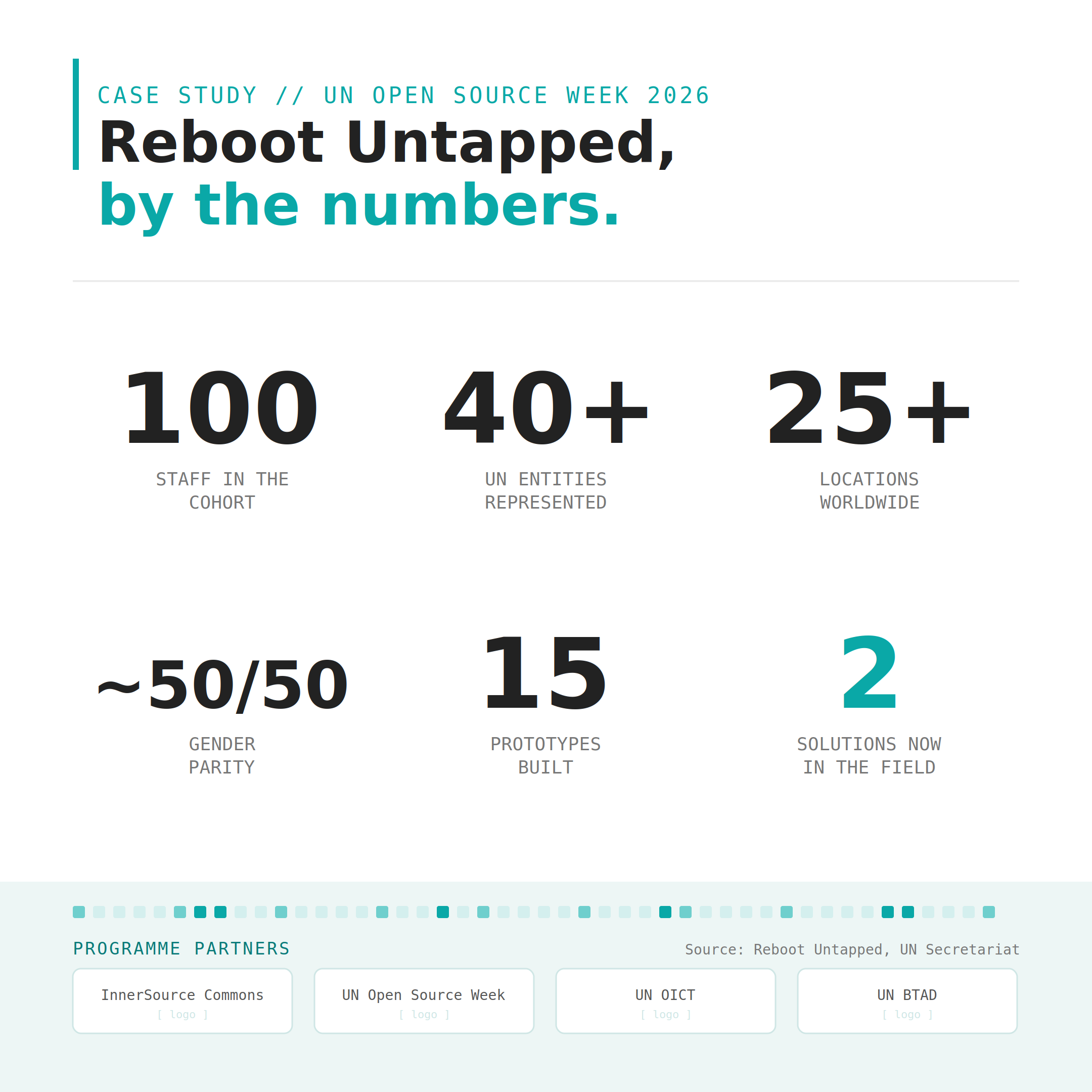
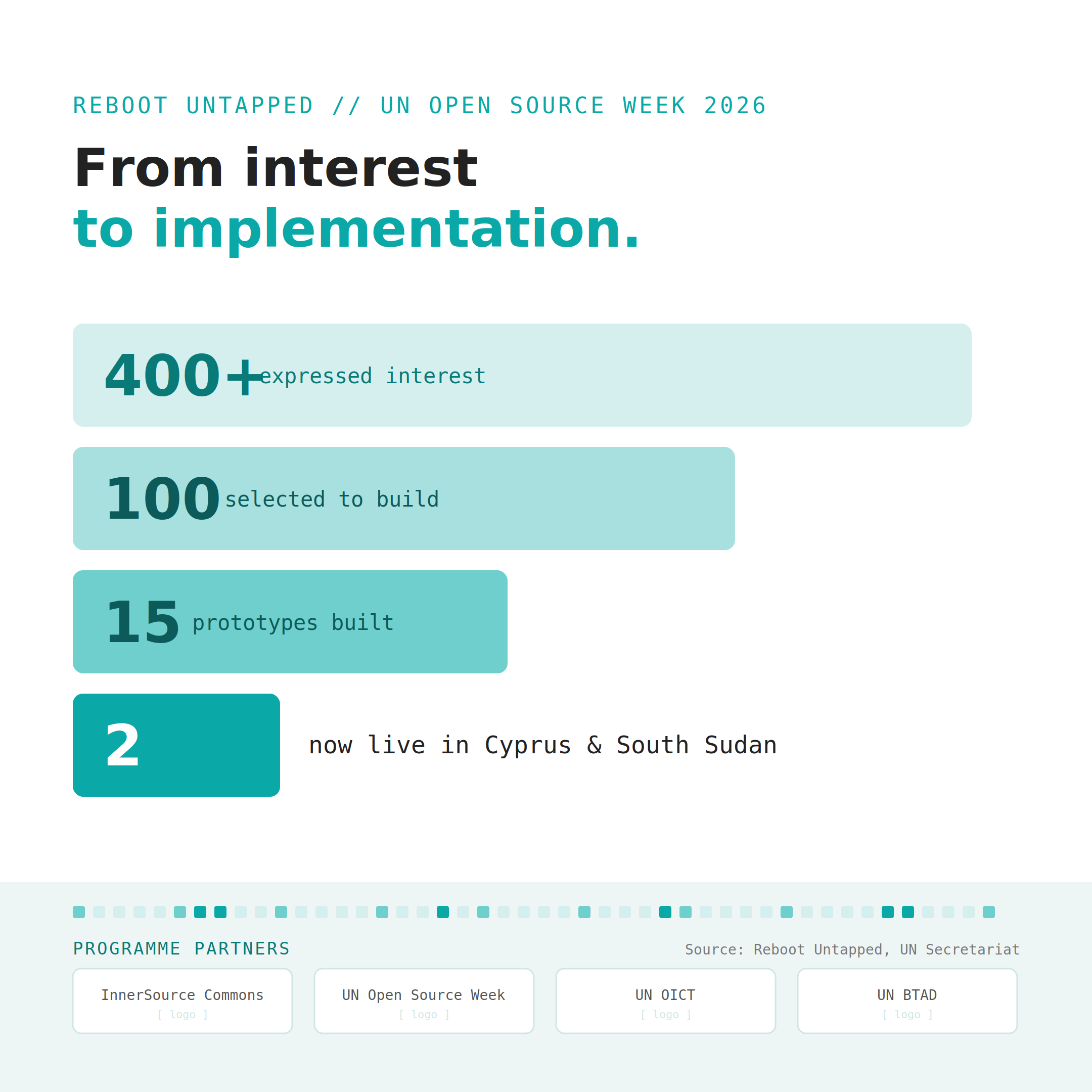
The initiative received significant interest, with approximately 300 individuals expressing interest, eventually whittled down to 100 participants from 40 different UN offices and entities worldwide. Participants included individuals from various position types, with a near 50/50 gender parity, which was an unintentional but positive outcome. The challenge was non-hierarchical, allowing assistants to lead teams.
The “Reboot Untapped” challenge was structured in four phases: challenge sourcing, team formation, accelerator program, and product submission and evaluation. The accelerator program included masterclasses on innovation, though participants often preferred direct engagement with subject matter experts. Coaching was provided, with dedicated individuals facilitating communication between teams and subject matter experts.
Solutions were pitched in a 5-minute session and then evaluated by a team of subject matter experts and UN officials. Instead of a single winner, various awards were given to acknowledge all voluntary contributions, though 1-2 stronger solutions emerged from each challenge and are being moved forward for implementation. An internal platform called Unite Ideas, built on the Hype technology, served as a centralized repository for team information, documents, and concepts, and was also used by the evaluation team.
Senior management actively supported the initiative, viewing it as a practical step towards the UN 2.0 vision of a modernized, adaptable, and agile organization. Feedback from participants highlighted benefits such as increased connectivity, opportunities for professional and personal growth, broadening horizons, and involvement in real-world challenges. While some challenges existed, such as team dynamics and the level of technical guidance, the overall experience was seen as a valuable learning opportunity for cultural change within the UN.
Why InnerSource was Adopted
The adoption of InnerSource principles within the UN’s “Reboot Untapped” initiative was driven by several key factors, primarily addressing the evolving needs and strategic vision of the organization.
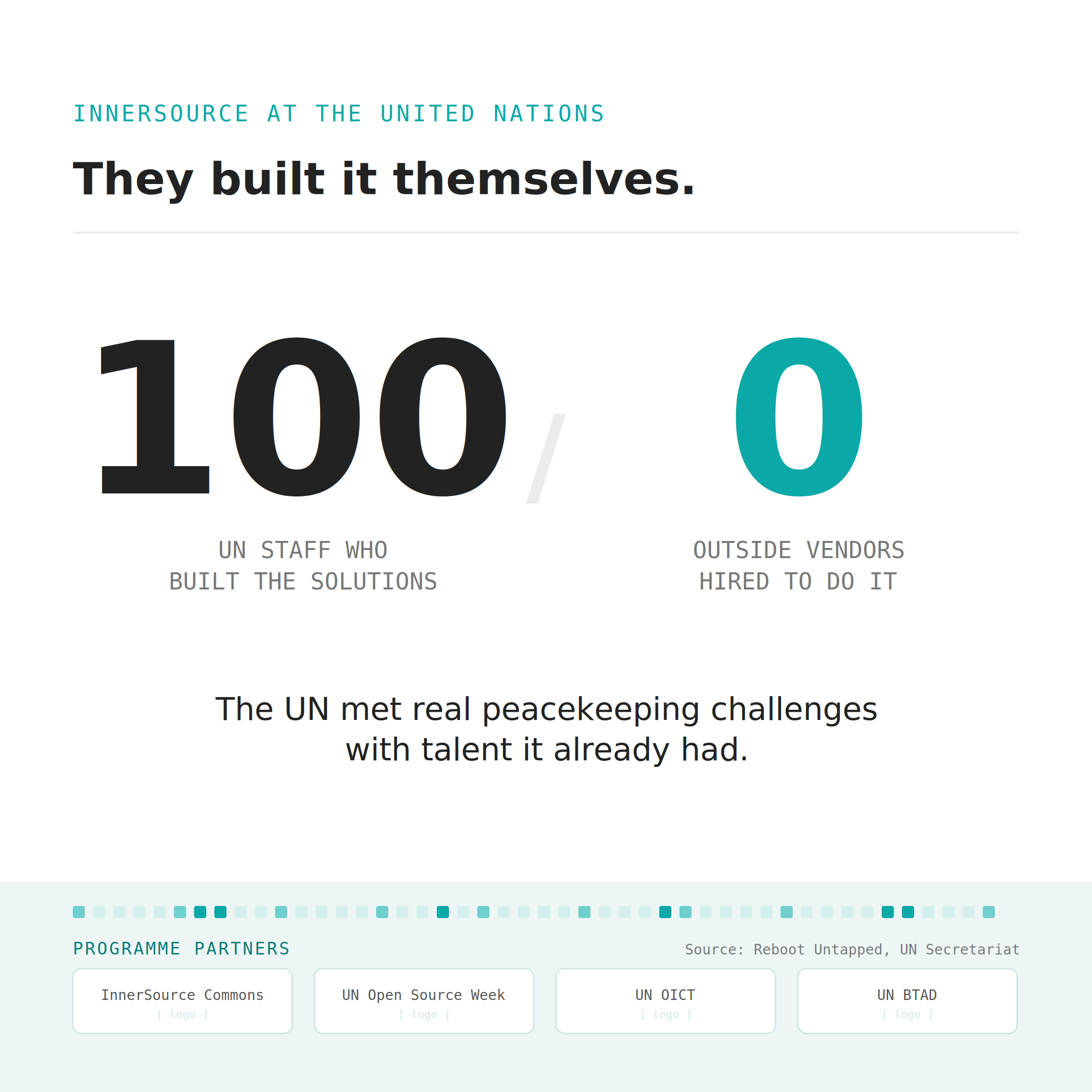
Firstly, there is a clear business case for leveraging internal talent in a cost-effective manner. Historically, the UN model often involved outsourcing development to external consultants and vendors. However, with increasingly tight budgets and a significant reduction in staff development funds, there’s a recognized need to cultivate internal capabilities and do “more with less”. InnerSource, by encouraging internal collaboration and contribution, allows the UN to develop solutions without incurring significant external costs. The time commitment of internal staff and the project team represented the primary cost, but no direct financial expenditure was made on the project itself.
Secondly, “Reboot Untapped” aligns with the broader UN 2.0 vision, which aims for a rejuvenated, more modern UN. This vision emphasizes advancing skills and potential in areas like digital data, innovation, behavioral science, and strategic foresight, all wrapped around organizational culture change. The initiative serves as a tangible demonstration of the UN “walking the talk” in this regard, proving that there is significant untapped talent within the organization that can contribute to these strategic goals.
Thirdly, InnerSource provides a solution to address staff engagement and career development challenges. Surveys indicated that many UN staff felt their potential for career development and growth was limited. “Reboot Untapped” offered a valuable opportunity for individuals to explore new areas, develop skills, and apply their expertise to impactful projects, fostering a sense of purpose and connection that traditional hierarchical structures might not provide. The non-hierarchical nature of the teams further empowered individuals at all levels to lead and contribute.
Finally, the nature of the challenges themselves lent themselves well to a collaborative, InnerSource approach. Problems like climate and conflict nexus in South Sudan or information management in Cyprus are complex and require diverse perspectives and skill sets. By bringing together individuals from different offices and entities, “Reboot Untapped” facilitated cross-functional collaboration and breaking down silos. This collective ingenuity is seen as crucial for tackling the significant challenges the UN faces. The idea of reusability, where solutions developed for one context (e.g., South Sudan’s climate tools) could be adapted for other regions facing similar issues, also underpins the InnerSource approach, potentially leading to future savings in development time and resources.
Perceived Benefits of Using InnerSource
The “Reboot Untapped” initiative, by adopting InnerSource principles, yielded several perceived benefits for the United Nations:
- Talent Identification and Utilization: The program successfully identified a significant pool of internal talent with strong technical and innovative skills that might have otherwise remained untapped. It provided a platform for staff to showcase their abilities and contribute beyond their traditional roles.
- Enhanced Collaboration and Breaking Silos: A major benefit highlighted by participants was the opportunity to connect and collaborate with colleagues across different entities, regions, and hierarchical levels who they might never have met otherwise. This fostered a sense of community and broke down organizational silos, leading to “amazing team collaboration”.
- Professional and Personal Growth: Participants reported significant professional and personal growth, broadening their horizons and gaining exposure to new concepts and real-world challenges. While the technical skill development was not as extensive as desired, the exposure to innovation processes and open-source concepts was valuable for many.
- Development of Practical Solutions for Real-World Problems: The initiative resulted in 15 solutions for pressing peacekeeping challenges, some of which are actively being implemented. Solutions for South Sudan and Cyprus were developed much faster than typical UN projects, demonstrating the agility of this approach.
- Increased Staff Engagement and Morale: The program provided an avenue for staff to feel more connected and engaged, addressing pre-existing frustrations regarding limited career development opportunities. The human aspect of working towards impactful solutions inspired participants to go “above and beyond,” including working during weekends and after hours.
- Proof of Concept for UN 2.0 Vision: The success of “Reboot Untapped” served as a practical demonstration to senior management that the UN can “walk the talk” in terms of its UN 2.0 vision for a more modern, adaptable, and agile organization through digital, data, and innovation capabilities.
- Potential for Cost Savings and Reusability: Although not yet quantified, the solutions developed internally have the potential to save the UN money by reducing the need for external consultants and by being reusable across different missions or contexts with similar challenges. The South Sudan solution, for instance, could theoretically be applied in other countries facing similar climate-conflict issues.
- Non-Hierarchical Work Environment: The challenge promoted a non-hierarchical working environment where individuals from all levels could contribute and lead, fostering a more inclusive and innovative culture.
Measuring Success and Quantifying Benefits
Currently, the success of “Reboot Untapped” is primarily measured through qualitative feedback and the successful development and initial implementation of solutions. Participant surveys were conducted, with completion being a prerequisite for receiving a certificate of participation. This feedback highlighted key benefits such as increased connectivity, professional growth, and involvement in real-world challenges. The strong support from Under-Secretaries-General also served as an indicator of perceived success at the leadership level.
However, the team acknowledges a current lack of quantifiable metrics for the perceived benefits, particularly in terms of financial savings or time efficiency. While the potential for cost savings through reusability (e.g., adapting the South Sudan climate solution for other regions) is recognized, this has not yet been formally quantified. The challenge developers also noted that their work itself did not incur direct financial costs, highlighting the internal time investment as the main expense.
To quantify the perceived benefits and build a stronger business case for future InnerSource initiatives, the following approaches could be adopted:
-
Cost Savings Analysis:
- Baseline Comparison: Compare the cost of developing similar solutions through traditional external procurement (consultants, vendors) versus the internal “Reboot Untapped” model. This would involve estimating the hypothetical cost of outsourcing the implemented solutions (e.g., South Sudan and Cyprus tools) if they had not been developed internally.
- Reusability Impact: Track instances where solutions or components developed during “Reboot Untapped” are adopted or adapted by other UN entities. Quantify the time and resources saved by not having to develop these solutions from scratch in each instance.
- Efficiency Gains: For solutions like the Cyprus information management tool, quantify the time saved by UN peacekeepers in accessing and consolidating information, leading to improved operational efficiency. This could be measured through time studies or surveys of users.
-
Talent Development and Engagement Metrics:
- Skill Acquisition Tracking: Implement pre and post-challenge assessments or self-reported skill development surveys to quantify the increase in technical and soft skills (e.g., collaboration, project management) among participants.
- Career Progression Analysis: Over time, track if participation in “Reboot Untapped” correlates with career advancement, movement into new roles, or increased responsibilities within the UN, particularly in digital, data, and innovation areas.
- Staff Retention and Satisfaction: Monitor engagement scores from internal staff surveys specifically for participants of such initiatives compared to the wider UN population. Higher engagement and satisfaction could contribute to better staff retention.
-
Impact on Mission Effectiveness:
- Operational Improvement Indicators: For solutions implemented in peacekeeping missions, identify specific operational indicators that can be measured. For example, for the South Sudan solution, track improvements in disaster preparedness, response times, or reduction in adverse impacts of climate events. For the Cyprus solution, measure improvements in decision-making speed or effectiveness of patrols.
- Qualitative Impact Statements: Collect more detailed qualitative data from end-users and beneficiaries within the missions to articulate the real-world impact of the developed solutions.
The team recognizes the need for these metrics to convince upper management to commit more resources, potentially in the form of a dedicated innovation fund or a shift in the IT department’s operational model. The idea of an “InnerSource maturity model” was also suggested to assess the current readiness and define future steps for fostering collaboration and transparency within the organization. This would involve defining specific goals for transparency, communication, and community building, and then establishing a framework to measure progress.
Acknowledgements
This case study was developed following a series of interviews with the “Reboot Untapped” team at the United Nations, in collaboration with the InnerSource Commons Foundation. We would like to thank everyone at the UN who took the time to share their experiences, including Beth Helen Magne-Watts and Melissa Quinn of the United Nations, and Daniel Izquierdo of the InnerSource Commons Foundation.
If you would like to share your InnerSource story, please reach out to us at info@innersourcecommons.org.